
10 Reasons Your Dissertation Supervisor Keeps Asking for Revisions, Decoded From Supervisor Comments on Dissertation Drafts

By Siddharth Gupta, 12 years in dissertation guidance and applied research. Connect on LinkedIn.
Key takeaways
- Supervisor comments on dissertation drafts are rarely literal. Each one usually points to one of ten underlying problems.
- Most comments are phrased as questions on purpose. Treat them as a prompt to defend your reasoning, not as a verdict.
- A phrase like “needs more depth” or “unclear argument” has a specific, fixable meaning, covered reason by reason below.
- If the same issue keeps resurfacing after four or five rounds, the fix is usually structural, not another light edit.
Supervisor comments on dissertation drafts rarely say what they mean on the surface. I’ve spent 12 years guiding dissertation and PhD students through exactly this problem, and the pattern repeats across every university I’ve worked with. I’ll say “supervisor” throughout since that’s the common term in the UK and India. If you’re in the US working with a committee and a chair, every point here applies the same way.
A comment that reads as a small note is usually pointing at something structural. A comment that reads as harsh criticism is often just badly phrased shorthand for a fixable issue. This is why “why does my supervisor keep asking for revisions” becomes such a common question around month four or five of writing. You fix what the comment literally says, resubmit, and get a new round of notes that feel unrelated to what you just changed.
It isn’t random. It’s almost always one of ten underlying problems, and once you know which one you’re dealing with, the fix takes a fraction of the time.
Quick definition – Supervisor comments on dissertation drafts are a supervisor’s written or verbal notes on a chapter, flagging where the argument, evidence, structure, or methodology falls short of what the research needs to support its own claims. Most are phrased as questions or short remarks rather than direct instructions, which is exactly why they feel vague.
What Common Dissertation Supervisor Feedback Is Actually Telling You
A study published in the Journal of Language, Literature and Education looked at 215 supervisor comments across five dissertations and found that well over a third were phrased as questions rather than statements, with direct instructions making up a smaller share. My own experience lines up with this.
In my opinion, the study undersells one point. It treats the interrogative phrasing as a neutral communication style, but in practice most supervisors use questions specifically because they want you to arrive at the gap yourself, not because they’re being polite. That difference matters. If you read “why have you chosen this sample size” as a factual complaint, you’ll panic. If you read it as a genuine prompt, you’ll go find your justification and write two sentences defending it.
A separate academic chapter on doctoral supervision makes a related point from the opposite direction. It argues that even supervisors who publish frequently aren’t always trained in the close textual analysis needed to give precise feedback, which is part of why comments land as coded rather than explicit. I’d push back slightly here too. Lack of training explains imprecise feedback, but it doesn’t fully explain why so many supervisors default to the same handful of phrases across completely different fields. In my experience that repetition is less about a training gap and more about supervisors flagging the one thing they consistently notice missing across most student work, independent analysis, not noticing it’s missing in your specific sentence.
So before anything else, treat every comment as a question about your reasoning, even the ones that don’t end in a question mark.
Reason 1. Your Research Objectives and Questions Don’t Line Up
What your supervisor is really asking
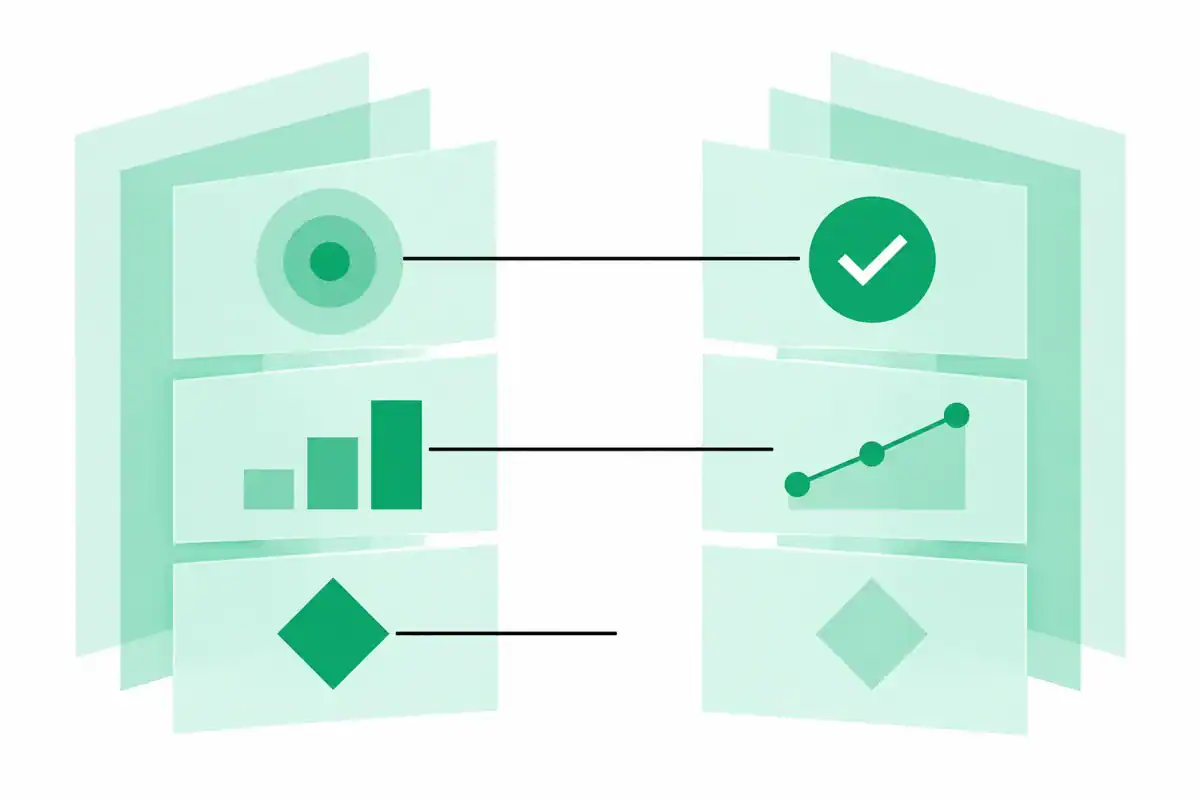
Your introduction promises to answer three questions. Your findings chapter answers one and a half. Supervisors catch this fast because they read your proposal, then your draft, side by side.
How to fix it in your next draft
Put your research questions and your findings headings next to each other in one document. Every question needs a matching section that directly answers it, using the same wording, not a paraphrase that sounds different enough to hide the gap.
Reason 2. Your Argument Is Descriptive, Not Analytical
What your supervisor is really asking
“This is descriptive” means you’ve reported what a source said without stating what it means for your own research. This is really a thesis statement problem wearing an objectives-chapter disguise. A chapter can be factually accurate and still have no argument in it.
How to fix it in your next draft
After every source you summarise, add one sentence that starts with “this suggests” or “this matters for my research because.” If you can’t finish that sentence, the source probably doesn’t belong in that paragraph yet.
Reason 3. Your Literature Review Summarises Instead of Engaging
What your supervisor is really asking
This is Reason 2’s cousin, specific to the literature review. A list of studies in chronological or alphabetical order, each with its own paragraph, reads like an annotated bibliography, not a review.
How to fix it in your next draft
Group sources by the position they take, not by author. Write one paragraph for studies that found X, one for studies that found the opposite, then a paragraph where you state where your own research sits between them.
Reason 4. Your Methodology Doesn’t Justify Its Own Choices
What your supervisor is really asking
Naming a method isn’t the same as defending it. “I used a cross-sectional survey” tells the reader what you did. It doesn’t tell them why that was the right call over the alternatives.
How to fix it in your next draft
For every major methodological choice, add a short paragraph that names one alternative you considered and explains why you rejected it. This includes your sample size, which supervisors routinely ask you to justify with a proper calculation rather than a round number picked for convenience.
Reason 5. Your Findings Don’t Connect Back to Your Objectives
What your supervisor is really asking
You can present accurate results and still fail this one. Supervisors want to see you explicitly tie each finding back to the question it answers, not leave that connection for the reader to infer.
How to fix it in your next draft
Open each findings subsection with a sentence that restates which objective it addresses, before you present the data. It feels repetitive while you’re writing it. It reads as rigorous to an examiner.
Reason 6. Your Terminology Shifts Throughout the Document
What your supervisor is really asking
You call it “employee engagement” in Chapter 1, “job satisfaction” in Chapter 3, and “workplace commitment” in Chapter 5. To you these feel like natural variation in writing. To a supervisor, it reads as three different unexamined concepts.
How to fix it in your next draft
Pick one term per concept in Chapter 1, define it once, and search your whole document for every synonym you’ve used instead. Replace all of them.
Reason 7. You’re Quoting Sources Instead of Arguing With Them
What your supervisor is really asking
Heavy quoting, even accurate quoting, can read as avoidance. It can also look like the kind of generic, source-stitched prose that’s getting flagged as AI-written at some universities right now, which is its own separate headache if you haven’t dealt with it yet. Here’s what to do if a supervisor says your dissertation sounds like AI.
How to fix it in your next draft
Cap direct quotes at one per page unless the exact wording is doing real analytical work. Everywhere else, paraphrase and follow it immediately with your own interpretation.
Reason 8. Your Data Analysis Lacks Statistical Rigour
What your supervisor is really asking
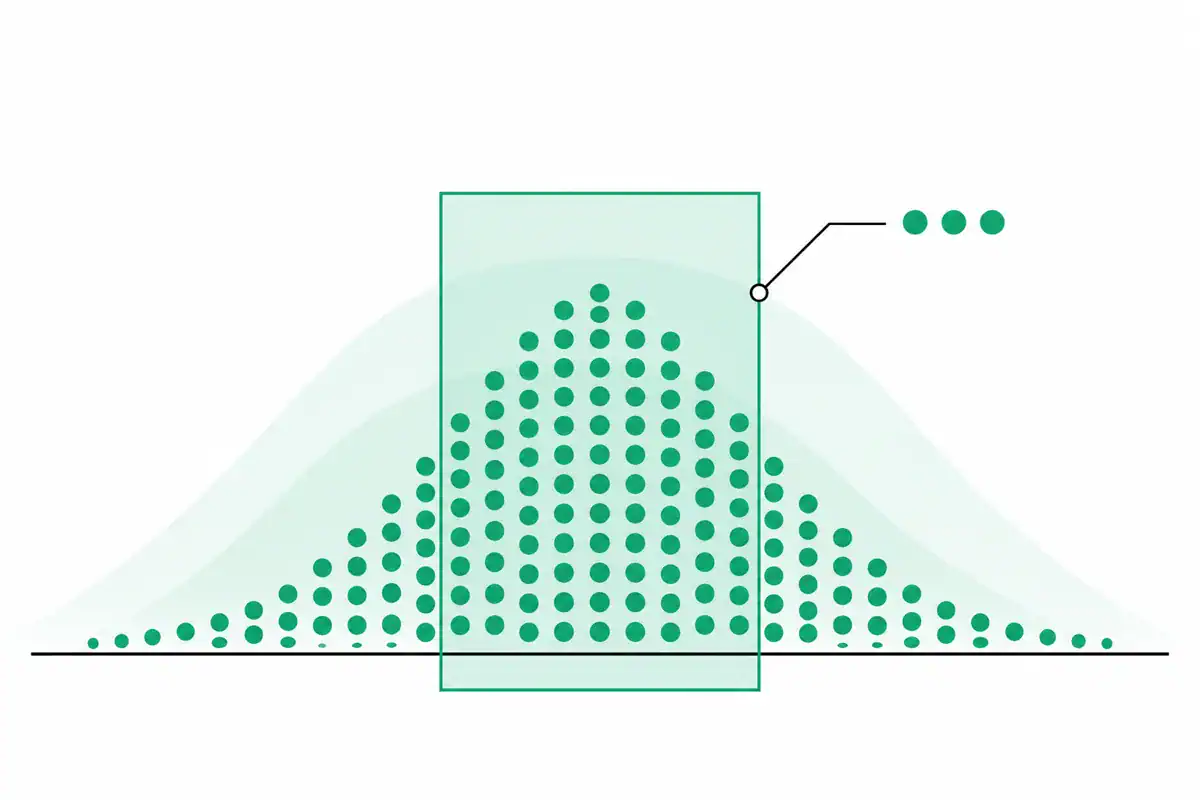
This is the one I see most often in my own consulting work, and it’s rarely about running the wrong test. It’s usually about skipped assumption checks. Running a t-test or ANOVA without reporting whether your data met the normality assumption is a common gap, and supervisors with any quantitative background catch it immediately.
How to fix it in your next draft
Before you report any parametric test result, report the assumption check that justifies using it. This guide to the Shapiro-Wilk normality test is a good starting point if you haven’t run that check yet.
Reason 9. Your Structure Doesn’t Signpost the Argument
What your supervisor is really asking
Your chapter order might be logically correct and still confuse a reader, because nothing tells them where they are in the argument or why the next section follows from the last one.
How to fix it in your next draft
Add a one-paragraph roadmap at the start of every chapter and a one-sentence bridge at the end of every section, stating what comes next and why. If your whole document feels disorganised at a structural level, not just within chapters, this chapter-by-chapter organising guide is worth working through.
Reason 10. Your Citations Are Inconsistent or Outdated
What your supervisor is really asking
A mix of citation styles, missing page numbers for direct quotes, or a literature review leaning on sources from fifteen years ago in a fast-moving field all signal the same thing to a supervisor, that the final polish hasn’t happened yet.
How to fix it in your next draft
Run one dedicated pass focused only on citations, separate from your content revision pass. Mixing the two means you’ll miss formatting errors because you’re thinking about arguments, not commas.
How to Respond to Supervisor Comments on Dissertation Drafts Without Guessing
Once you know the ten reasons above, the next skill is translating a specific comment into a specific action. Here’s how to address supervisor feedback on thesis drafts when the wording itself still feels unclear.
Common phrases and what they actually mean
| Supervisor phrase | What it usually means | What to do |
|---|---|---|
| “Needs more depth” | You described a source, you didn’t analyse it | Add your own interpretation after every summary |
| “Unclear argument” | Your paragraphs lack a stated position | State your claim in the first sentence of each paragraph |
| “Too descriptive” | Same issue as Reason 2, across a whole section | Add analysis sentences throughout, not just at the end |
| “Justify this choice” | A methodological decision has no rationale | Name and reject one alternative explicitly |
| “This doesn’t follow” | A structural or logical gap between sections | Add a bridging sentence connecting the two |
A 5-step process to turn comments into a revision checklist

- Copy every comment into one list, numbered in the order they appear in your document, using track changes or a plain numbered file if your supervisor hand-writes notes
- Next to each one, write which of the ten reasons above it falls under
- Group comments by reason, not by chapter, so you fix the pattern once instead of five separate times
- Make the change, then write one line next to that comment describing what you changed
- Before resubmitting, re-read only your list of changes against your supervisor’s original comments, checking each one off
This echoes practices associated with Vitae’s researcher development framework in the UK, which frames good revision practice around closing the feedback loop, showing a supervisor specifically what changed and why, rather than just handing back a cleaner-looking document.
If you’re replying by email rather than resubmitting in person, keep the note short. List your checklist items as bullet points directly in the email body, and don’t over-explain each one, a single line per change is usually enough.
When to go back and ask your supervisor to clarify
If you’ve genuinely tried to match a comment to one of the ten reasons and it still doesn’t fit, ask. One short, specific question, such as “when you say this needs more depth, do you mean the analysis or the evidence,” reads as rigour to a supervisor. Vague resubmissions read as avoidance.
The Most Common Dissertation Revision Mistakes Students Make
I’ve reviewed enough resubmitted chapters to see the same dissertation revision mistakes repeat, regardless of subject area.
- Revising the wording but not the argument. Rewriting a paragraph in different sentences without changing its underlying logic doesn’t address a comment about weak reasoning.
- Only fixing the comments that are easiest to act on. Grammar and citation fixes get done first because they’re simple. Structural comments, the ones that actually matter most, get left for “later” and quietly dropped.
- Not tracking what’s already been addressed. Without a checklist, it’s easy to fix the same issue the supervisor already flagged in an earlier draft, which signals that previous feedback wasn’t fully absorbed.
A short case in point
A composite example based on patterns I see regularly in my own practice. A public health master’s student I’ll call Meera had been through four rounds of revision on her literature review alone. Every resubmission came back with “still too descriptive” written in the margin. She’d been rewriting sentences, not changing structure.
We sat down, grouped her supervisor’s comments by the ten reasons above, and found every single one fell under Reason 3. We restructured the chapter by position rather than by author in one sitting. It passed on the next submission. The content barely changed. The structure did.
When Repeated Revisions Signal a Bigger Problem
Occasional heavy revision rounds are normal and don’t mean anything is fundamentally wrong.
Tough supervisor or unreasonable one
A tough supervisor gives specific, repeatable reasons, even if the tone is blunt, and those reasons change as you fix things. An unreasonable one keeps shifting the goalposts on points you’ve already addressed, with no new reasoning attached. If you genuinely can’t tell which one you’re dealing with, that uncertainty is common, it isn’t a sign you’re bad at this.
When to involve your department
If you’re past your fourth or fifth round on the same chapter and the written comments keep contradicting each other, or contradict something your supervisor said in your last meeting, that’s worth raising with your department’s postgraduate or doctoral office, not just absorbing quietly. Most universities have a formal process for exactly this, and using it isn’t a black mark against you.
If this is also shaking your confidence
Feeling like you’re the only one struggling this much with feedback is extremely common at this stage, and it’s rarely accurate. If you’re heading toward your viva soon, this is also the point to start preparing a short, calm explanation of your revision history. Examiners generally respond well to a candidate who can explain what changed and why, not one who seems unaware the chapter was ever weak.
Getting outside editing or consulting help at this stage isn’t dishonest, as long as the arguments, analysis, and writing stay yours. A second pair of eyes checking your structure or your statistics is no different from a supervisor doing the same job earlier in the process.
If you’re consistently unsure whether your own revision process is the gap, here’s how to know if you actually need a dissertation expert rather than just more time.
Frequently Asked Questions
How many times is it normal to revise a dissertation chapter?
Two to four rounds per chapter is common, and more isn’t unusual for a literature review or methodology chapter. What matters more than the count is whether each round addresses a new issue or repeats the last one.
What does it mean when a supervisor says your argument needs more depth?
It almost always means you’ve described what a source says without stating what it means for your own research question. Add an interpretation sentence after each summary.
How do you politely push back on feedback you disagree with?
State your reasoning in writing and ask your supervisor to confirm whether it addresses their concern, rather than simply ignoring the comment. Most supervisors respond well to a clear, respectful rationale.
Can a supervisor fail your dissertation after multiple rounds of revisions?
Multiple revisions are a normal part of the process and don’t by themselves indicate a failing piece of work. Outcomes depend on your university’s specific assessment criteria, so check your handbook for how revision history factors into a final grade.
What should you do if the feedback is too vague to act on?
Ask one specific, narrow question rather than guessing. A targeted question about what the comment means shows engagement, not incompetence.
How do you tell a tough supervisor from an unreasonable one?
A tough supervisor gives consistent, specific reasons that evolve as you fix things. An unreasonable one shifts the goalposts on points already addressed without new reasoning. If the pattern looks like the second one over several rounds, it’s worth raising with your department.